English
 русский
 عربى
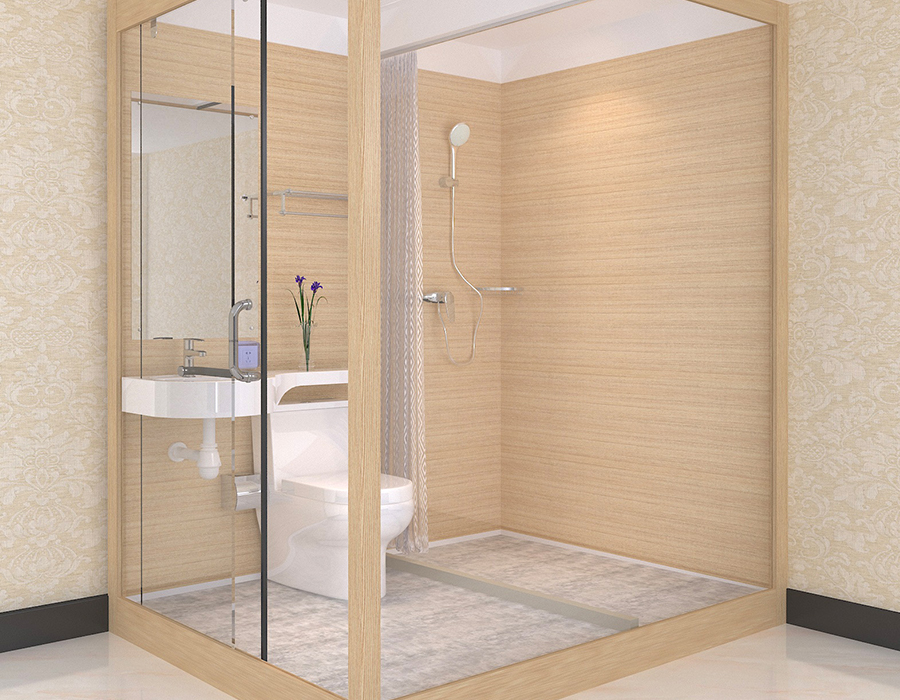
عربىPrefabricated Bathroom with PEC Resin Fiber Inner Wall Panels and Glass Outer Wall
This product is an integrated bathroom that integrates washing, toileting, showering, and other supporting faciliti...
Products
Imagine that when you step into the kitchen, you are greeted by a cooking space that is both environmentally friendly and beautiful, as well as practical and comfortable. What a wonderful experience that would be. The PEC material, independently developed by our compan,y can create such an ideal kitchen for you.
The uniqueness of PEC material is first reflected in its excellent thermal insulation performance. Its internal hollow structure is like putting a "warm coat" on the kitchen. In winter, it can lock in warmth, so that your hands are no longer cold when cooking; in summer, it can effectively block heat waves, keep the kitchen cool, and let you stay away from the trouble of stuffiness and enjoy the fun of cooking.
In terms of environmental protection, PEC material is a model. We are well aware of the importance of healthy living, so we strictly control the production process to ensure that it does not release any harmful substances. The kitchen using PEC material is like a small green world, which protects the health of you and your family, and also contributes to the sustainable development of the earth.
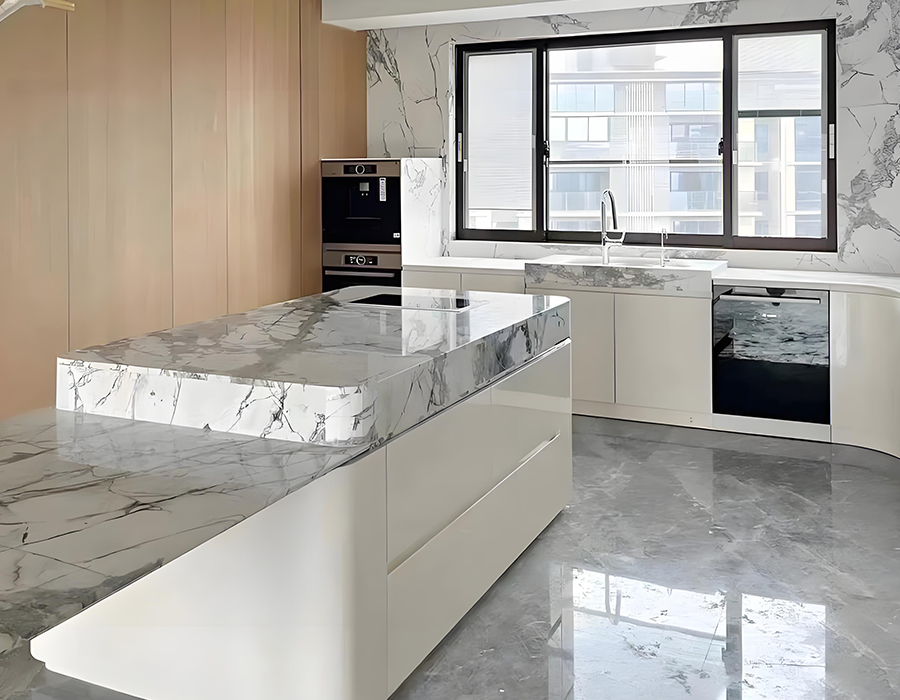
The appearance of PEC material is even more eye-catching. It is like a magical "master of imitation" that can realistically present various natural textures such as stone grain and wood grain. Whether you love the natural and rustic country style or prefer the fashionable and atmospheric modern style, PEC materials can be easily controlled and add unique charm to your kitchen.
Not only that, PEC materials are light in texture, and the installation process is as simple and fast as building blocks. Professional construction teams can complete the installation in a short time, greatly shortening the decoration period, allowing you to say goodbye to the tedious decoration and the torment of waiting as soon as possible. Moreover, it is waterproof, moisture-proof, and corrosion-resistant. Daily cleaning only requires a light wipe to keep the kitchen clean and tidy at all times.
Product DescriptionThe
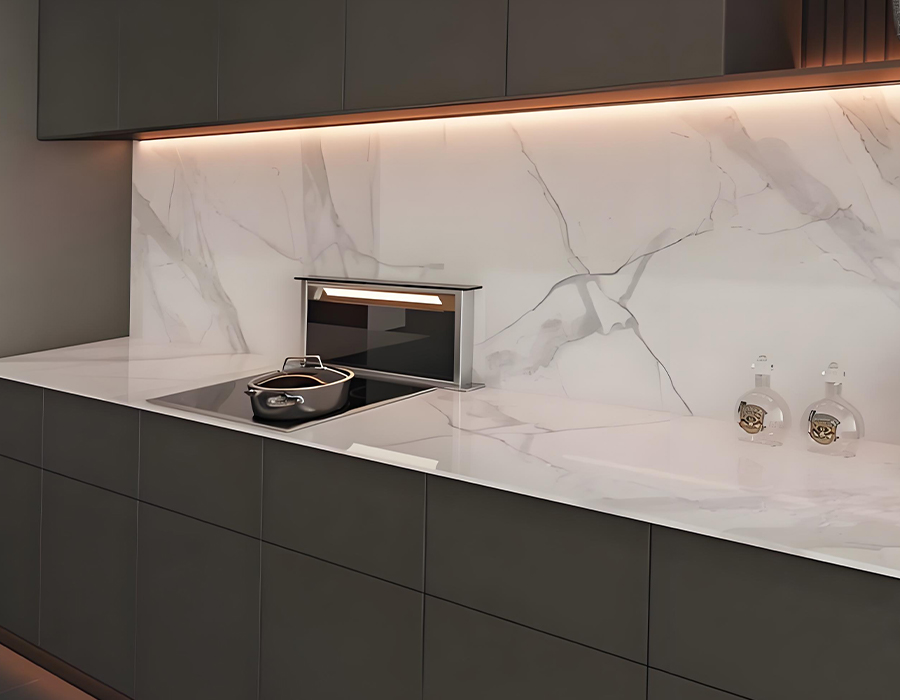
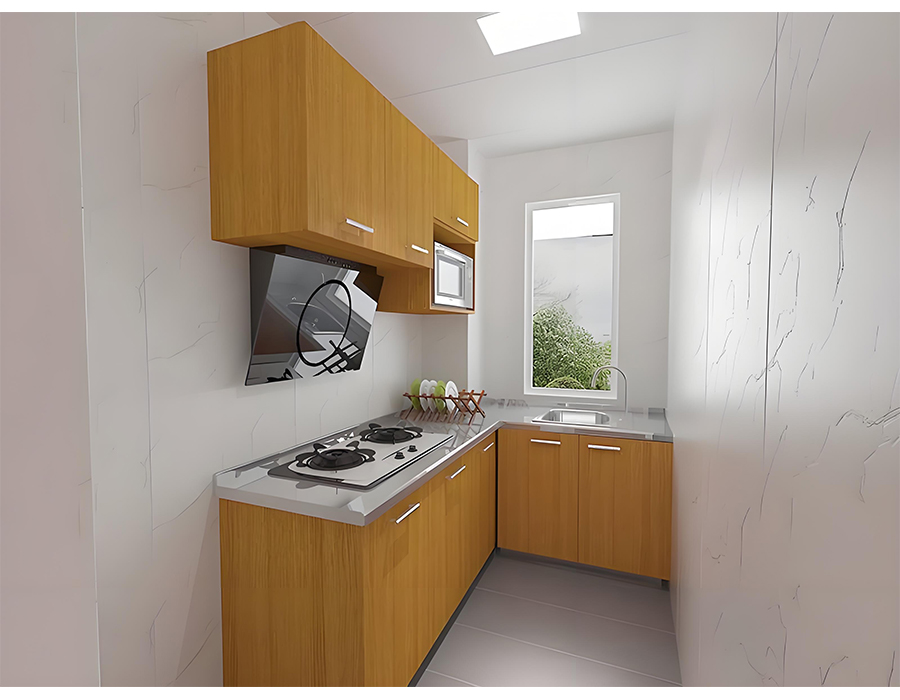
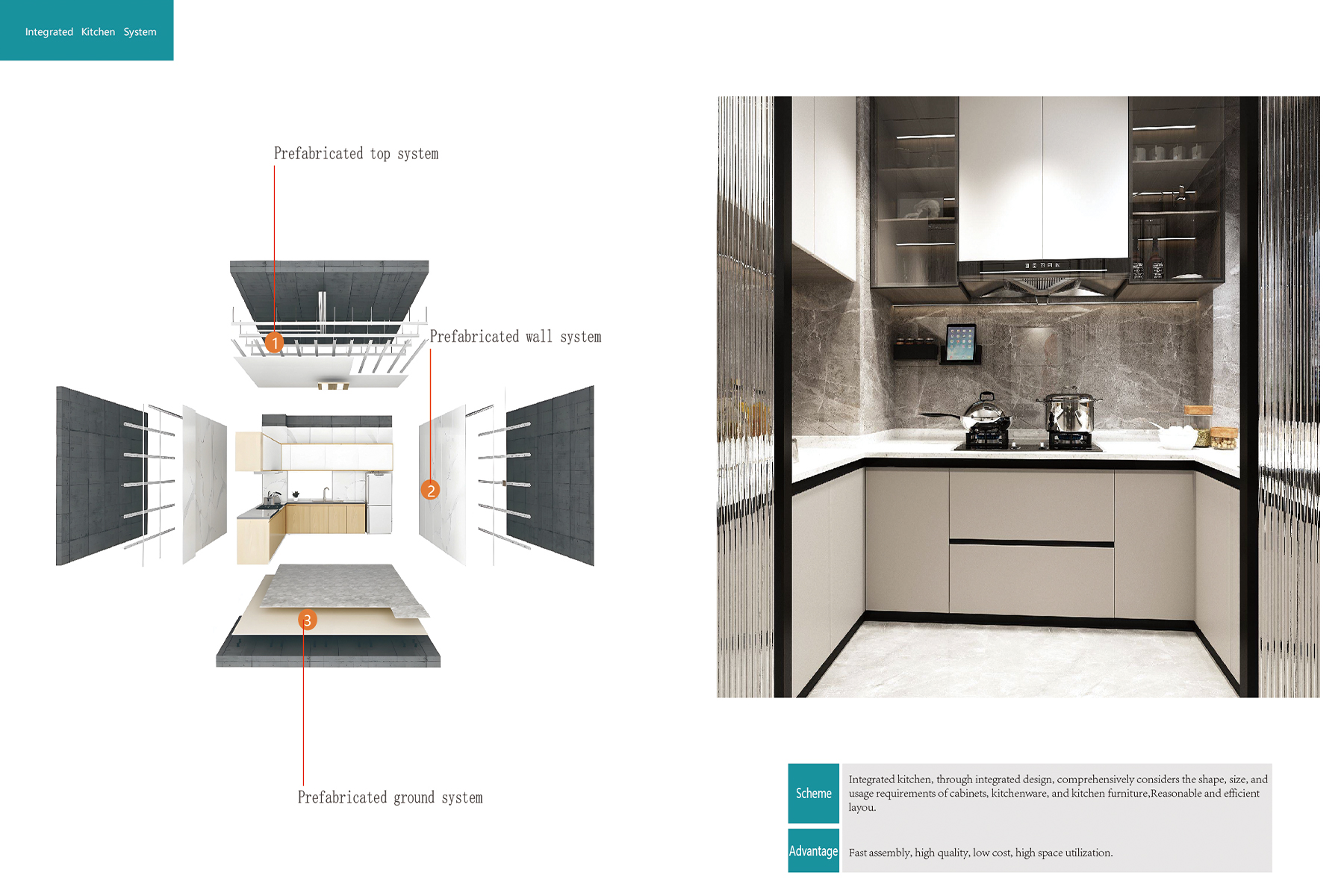
This prefabricated kitchen uses 15mm or 25mm PEC resin panels with an advanced hollow structure design. Its surface has been specially treated to realistically simulate the visual effect of ceramic tiles, with fine texture and rich color, which can complement various home decoration styles. Whether it is the neat and bright modern minimalist style or the gorgeous and elegant European classical style, it can be perfectly presented in this kitchen, creating a unique cooking space for users.
Application Scenarios and Scope of Application
Applicable to finely decorated apartments, etc.
Product Features/Benefits
1. Excellent fireproof performance: It meets the Class B fireproof standard. In the kitchen, an area with a high potential fire risk, it can effectively suppress the spread of fire, provide users with reliable safety protection, and make the cooking process more secure.
2. Significant cost-effectiveness: Compared with the high cost investment of traditional kitchens, our PC board prefabricated kitchen stands out with its extremely competitive price advantage. While ensuring high quality and high performance, it greatly reduces the user's procurement cost and achieves the optimal balance between cost and value.
3. Convenient and efficient installation: The prefabricated design concept makes the installation process of the kitchen simple and fast. Standardized components and precise interface design allow professional installation teams to complete assembly in a short time, greatly shortening the construction period and reducing interference with users' daily lives.
4. Lightweight and sturdy structure: The hollow structure of the PEC board is not only lightweight, which reduces the overall load of the kitchen, but also has excellent strength and stability. Even in long-term use, it can effectively resist deformation and damage to ensure the structural integrity and service life of the kitchen.
5. Excellent insulation and energy saving: The good insulation performance of the PEC board can effectively reduce heat loss and reduce energy consumption. While improving energy efficiency, it also saves users' daily use costs, which is in line with the development trend of green environmental protection.
6. Easy cleaning and maintenance: The smooth and flat surface of the PEC board is not easy to be stained, and daily cleaning only needs to be wiped with a damp cloth. This easy-to-clean feature greatly reduces the user's housework burden and keeps the kitchen clean and tidy at all times.
Technology & Processes
1. Prefabrication in the factory.
2. Pre-embed water and electricity first.
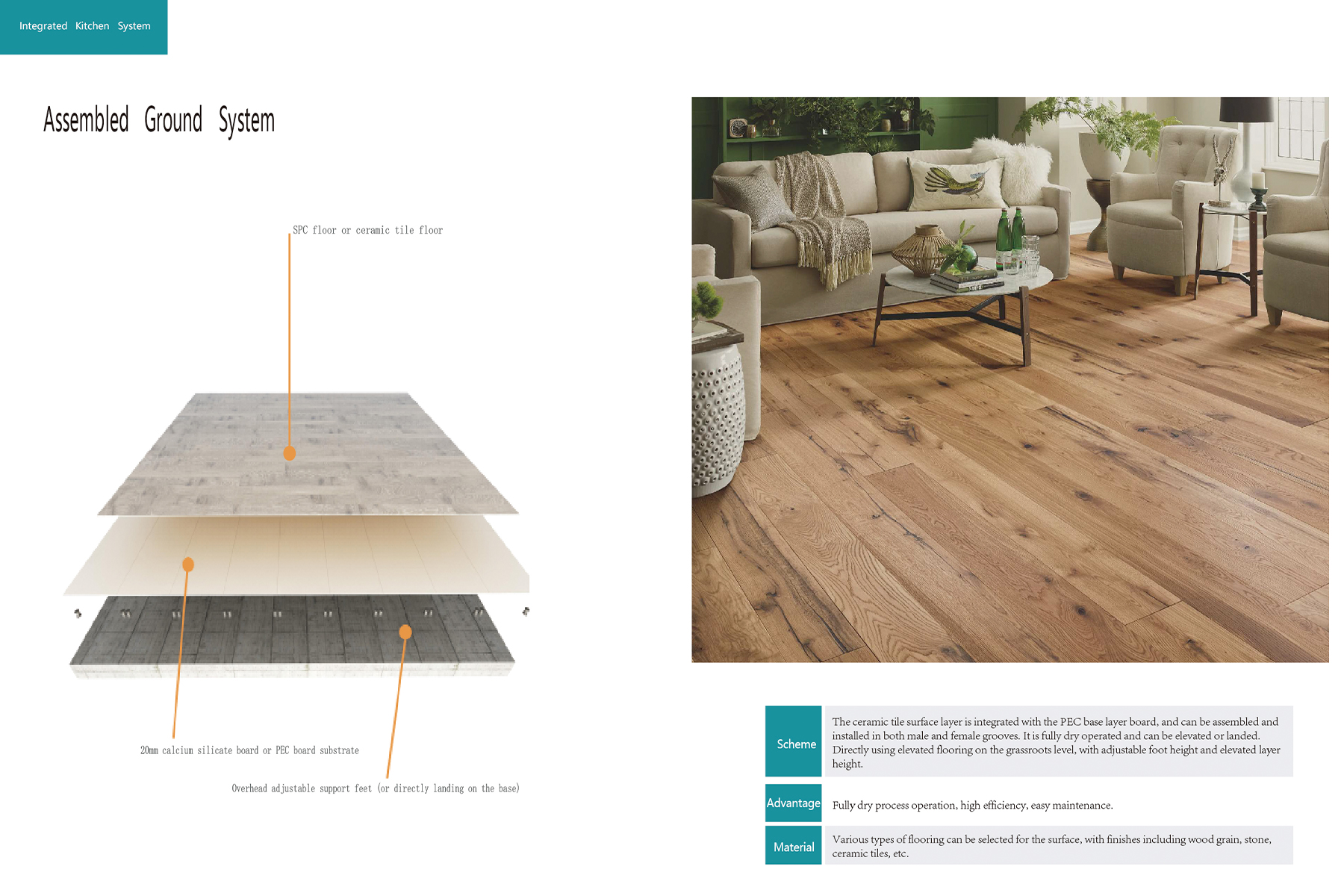
3. Use dry construction materials on the ground to meet the design requirements.
4. Wall panels PEC hollow decorative wall panels, male and female grooves are connected during installation, installed horizontally, and fixed with aluminum alloy connectors around.
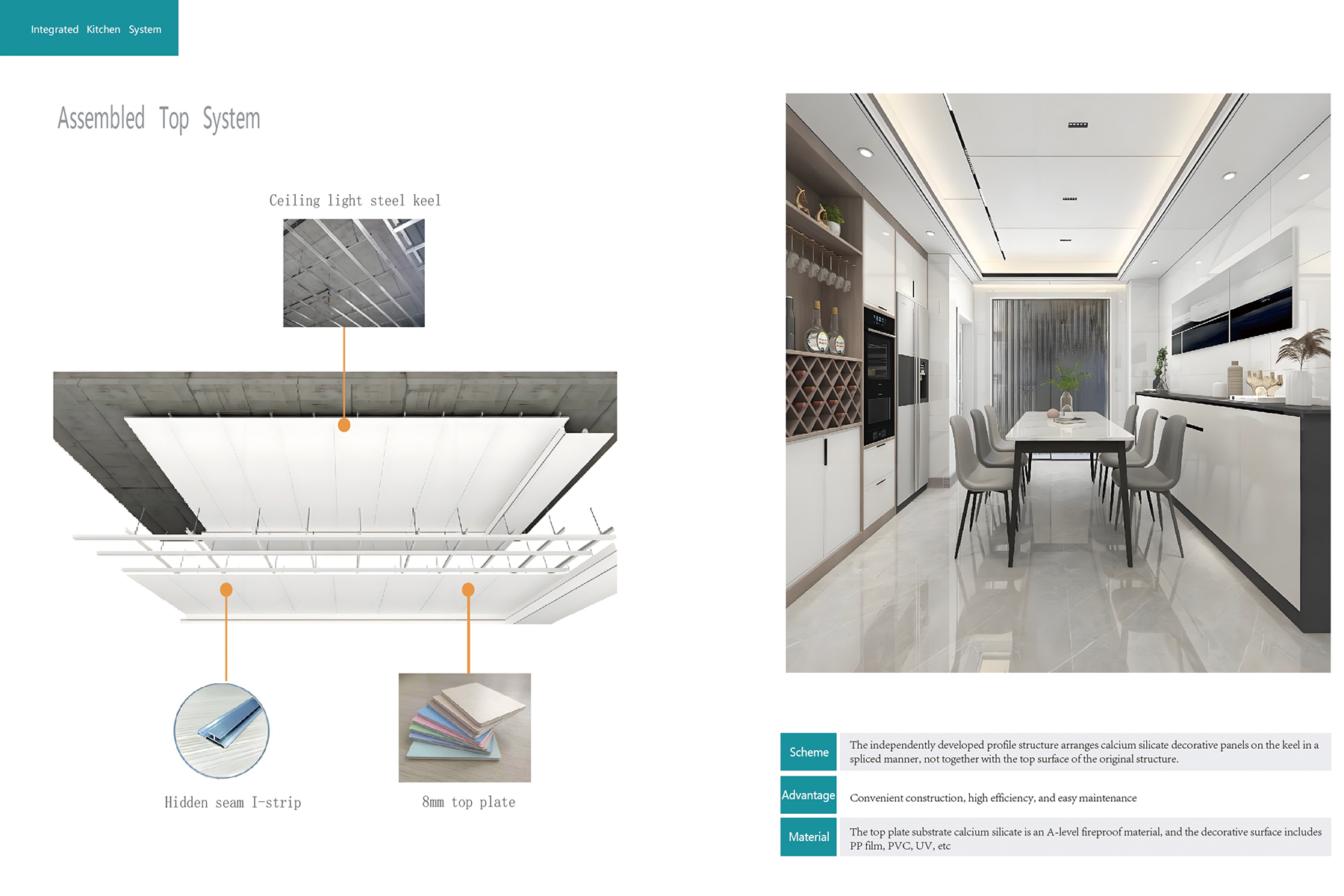
5. Install the ceiling according to the design.
6. Install internal accessories

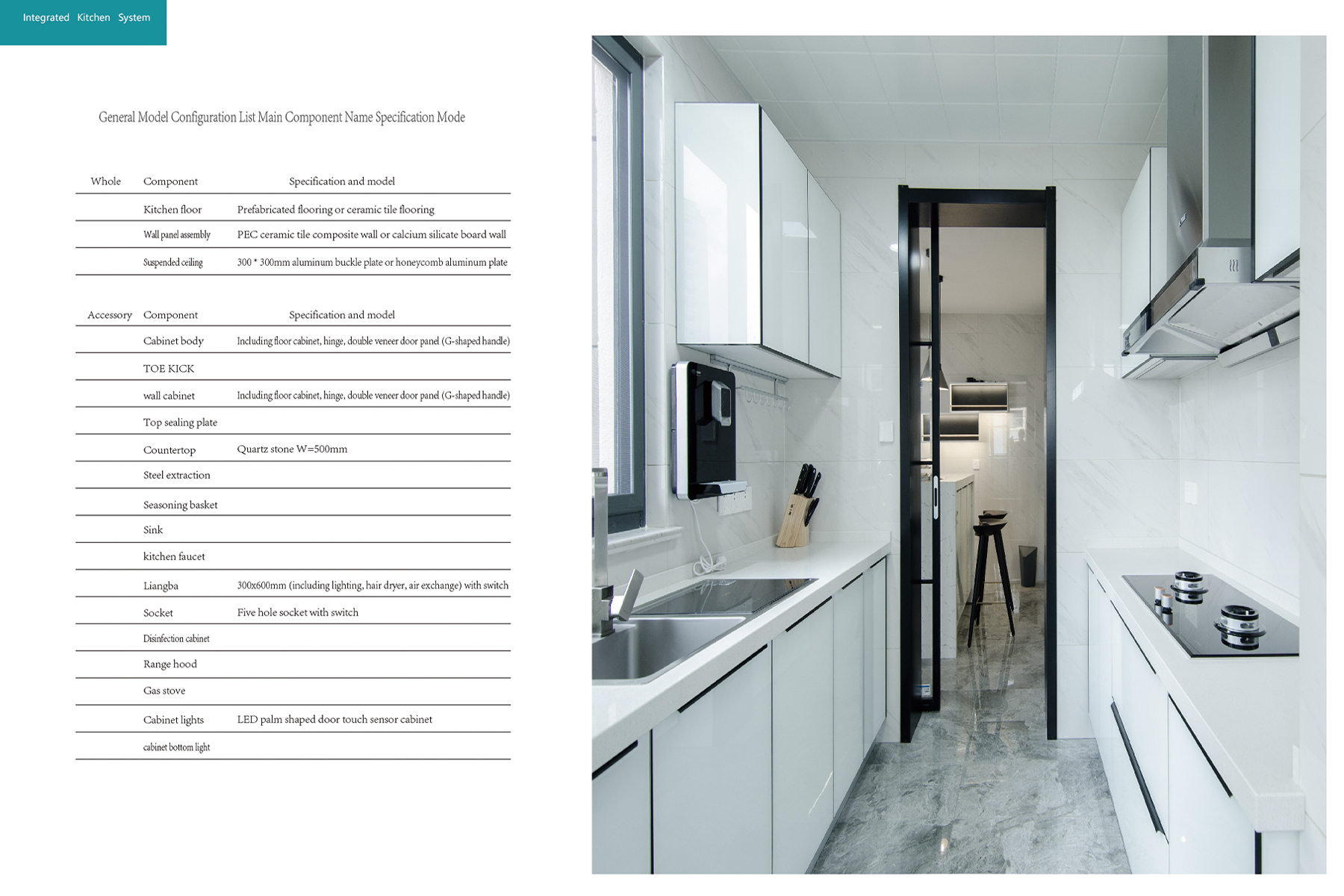
| Category | Details |
| Series | Prefabricated PEC wall kitchen series |
| Chassis | Prefabricated floor or traditional floor |
| Wallboard | 15mm, 25mm PEC board |
| Ceiling | Integrated ceiling or aluminum honeycomb large panel |
| Finished Product | Prefabricated in a factory based on drawings or on-site dimensions, mainly customized |
| Exterior Wall | No need for secondary decoration |
Why Glass Thickness Is the First Decision in Any Shower Enclosure Most people shopping for a shower enclosure start with style. They look at hardware finishes, door swing direction, or whether a desi...
READ MOREJiangsu, China — Jiangsu Kounor Home Technology Co., Ltd. is pleased to announce the successful shipment of our premium all-panel prefabricated bathrooms to Iraq. This delivery features our high-perf...
READ MOREWhat Defines a Prefab Integrated Bathroom System A prefab integrated bathroom is a fully enclosed sanitation unit manufactured off-site as a complete module, then delivered and set in place as a sing...
READ MOREWe are proud to announce the successful delivery and installation of our SMC (Sheet Molding Compound) prefabricated bathroom units for the prestigious Qinhuangdao Future Center project. Since being p...
READ MOREExpert Guide 2026 Engineering insights into self-contained shower cubicles, modern enclosure systems, and easy-install shower pods Defining the Integrated Shower Ecosystem The contemporary bathro...
READ MOREPEC Wall Prefabricated Kitchens are designed to streamline the installation process, significantly reducing construction time and labor costs. Unlike traditional kitchen wall installations, which often require on-site measurements, material cutting, and multiple installation steps, PEC Wall Prefabricated Kitchens come as pre-engineered, standardized panels. This modular design allows for fast assembly, minimizes human errors, and ensures consistent quality across projects.
Jiangsu Kounor Home Technology Co., Ltd., a leading enterprise in prefabricated building solutions, has leveraged its expertise in R&D, design, and production to optimize PEC Wall Prefabricated Kitchens for maximum installation efficiency. The company’s systematic innovation ensures panels are precisely manufactured and easily adaptable to various residential and commercial projects, including public rental housing, university dormitories, and premium residential apartments.
By providing fully integrated components such as wall panels, cabinetry interfaces, and utility access points, PEC Wall Prefabricated Kitchens simplify coordination between trades and reduce on-site adjustments. The use of standardized products ensures compatibility and repeatable quality, which is especially valuable for large-scale projects with tight deadlines.
| Parameter | Description |
|---|---|
| Material Type | High-quality, durable PEC panels with moisture and fire resistance |
| Panel Dimensions | Standardized modular sizes for easy assembly |
| Installation Time | Reduced by up to 50% compared to traditional kitchen walls |
| Integration | Pre-cut openings for plumbing, electrical, and cabinetry |
| Project Types | Rental housing, affordable housing, dormitories, hotel apartments, medical facilities |
| Customization | Available for mid-to-high-end projects with tailored designs |
Overall, PEC Wall Prefabricated Kitchens from Jiangsu Kounor Home Technology Co., Ltd. provide a modern solution to traditional kitchen construction challenges, offering efficiency, consistency, and adaptability across a wide range of building projects.
When choosing materials for kitchen construction, understanding the differences between PEC Wall Prefabricated Kitchens and traditional kitchen walls is crucial. PEC Wall panels are engineered for durability, precision, and efficiency, while traditional walls often rely on on-site construction with cement, bricks, and tiles.
PEC Wall Prefabricated Kitchens offer several advantages:
In contrast, traditional kitchen walls:
| Feature | PEC Wall Prefabricated Kitchens | Traditional Kitchen Walls |
|---|---|---|
| Material Quality | High-quality, durable, moisture and fire-resistant panels | Cement, brick, tiles; quality may vary by workmanship |
| Installation Time | Fast, modular assembly reduces time by up to 50% | Longer, multiple on-site steps required |
| Customization | Pre-cut openings and tailored designs for utilities and cabinetry | Limited; on-site adjustments required |
| Consistency | Factory-controlled, standardized quality | Dependent on site labor, prone to variations |
| Environmental Impact | Lower, reduced waste and dust | Higher, more debris and construction impact |
Copyright © 2025 Jiangsu Kounor Home Technology Co., Ltd.
All Rights Reserved.
Wholesale PEC Wall Panel Prefabricated Kitchen Pods Company