
 English
 русский
 عربى
عربىSMC or Tile: Which Prefabricated Bathroom Surface Actually Holds Up Better in Commercial Buildings?
The Surface Material Decision Procurement Teams Keep Getting Wrong
Every commercial modular project eventually reaches the same fork in the road: which surface material goes into the bathroom pod. It looks like a finishing decision, but it is actually a structural and lifecycle decision disguised as an aesthetic one. Procurement teams comparing smc prefabricated bathroom units against tile prefabricated bathroom pods are really comparing two different manufacturing philosophies: one built around a single molded composite shell, the other built around layered wet-area construction with a rigid substrate underneath.
The distinction matters most in modular bathroom construction where hundreds of identical units get installed across hotels, student housing, or hospital wings on tight schedules. A material mismatch discovered after installation is far more expensive to fix than one caught during specification.
SMC Bathroom Pods: One-Piece Molded Construction
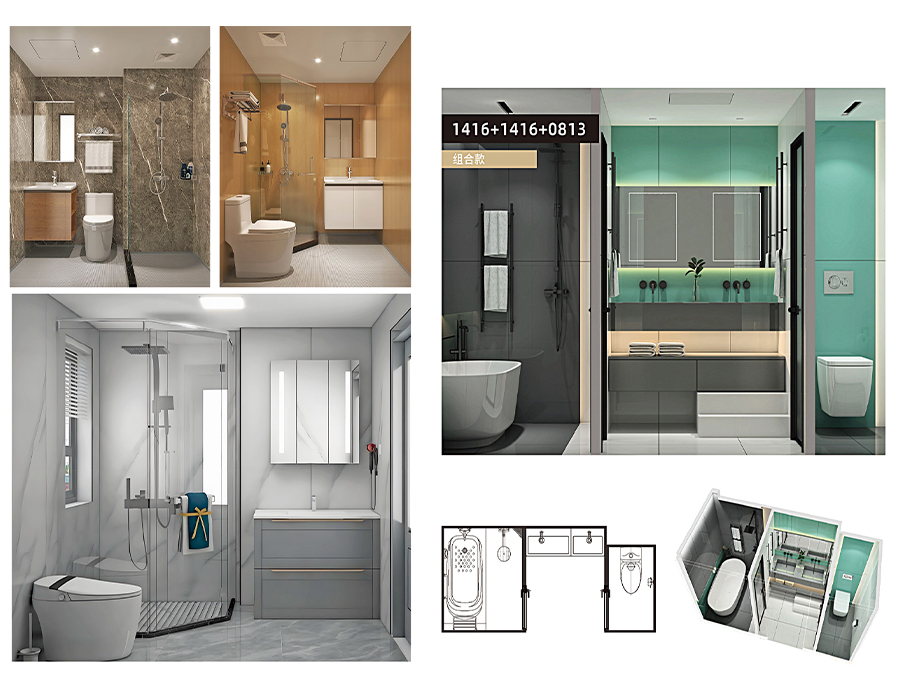
Sheet Molding Compound bathroom pods are formed as a single continuous shell, typically compression molded from a resin, glass fiber, and mineral filler blend under heat and pressure. The result is a seamless wall-floor-ceiling unit with no grout lines and effectively no seams below the waterline.
Structural and Surface Characteristics
- Wall and floor formed as one continuous piece, eliminating joint-based leak paths
- Surface density typically in the 1.8 to 2.0 g/cm3 range depending on filler ratio
- Smooth gel-coat finish resists mineral scale buildup common in hard water regions
- Unit weight per square meter runs 25 to 40 percent lighter than tiled equivalents
Field Data Point
In multi-story hospitality retrofits, contractors report SMC pod installation crews completing 8 to 10 units per shift versus 3 to 5 units per shift for tiled construction, largely because there is no wet-trade curing time between trades.
Tile Bathroom Pods: Layered Wet-Area Assembly
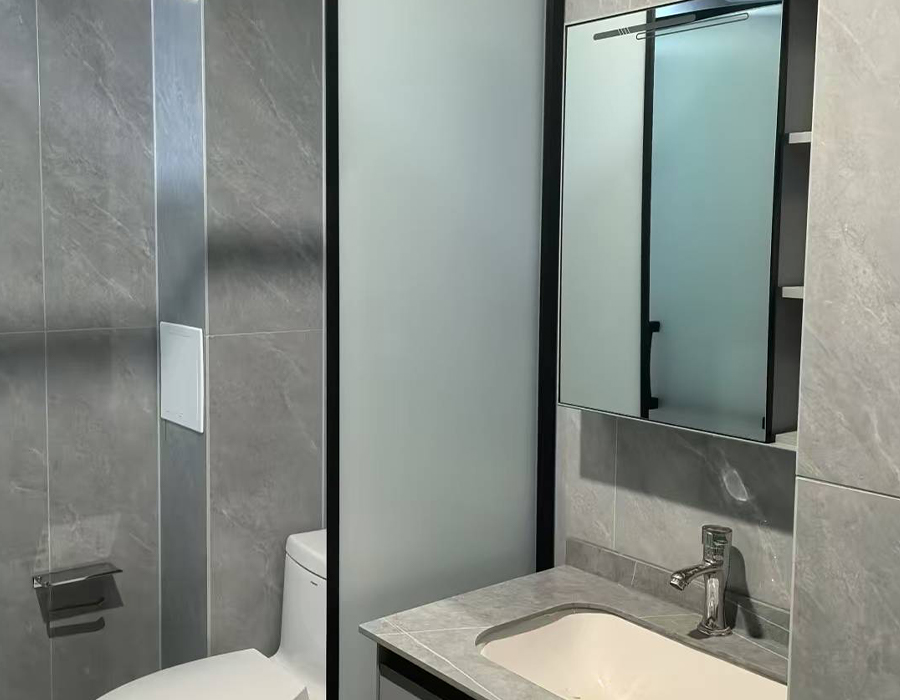
A tile prefabricated bathroom pod is built the way a site-built bathroom would be, just assembled inside a factory jig instead of on location. A steel or composite floor pan carries a waterproof membrane, then a cement board or fiber-cement substrate, then adhesive, then ceramic or porcelain tile.
Why Buyers Still Specify Tile
| Attribute | Reason It Matters |
|---|---|
| Design flexibility | Unlimited color, pattern, and texture combinations per brand standard |
| Perceived durability | Familiar material with decades of building-code precedent |
| Repairability | Individual tiles can be replaced without disturbing the whole surface |
| Regulatory acceptance | Some jurisdictions still default fire and slip codes around tile assemblies |
Waterproof Wall Panel Construction: Where the Two Systems Actually Diverge
The waterproofing strategy is the single biggest engineering difference between the two systems. SMC relies on material-level impermeability; tile relies on a membrane layer sitting behind a porous finish.
In practice this means SMC failures tend to be visible and localized, while tile failures often develop behind the surface and are discovered only once moisture has already reached the substrate or the surrounding structure.
Bathroom Pod Longevity: What Actually Shortens Service Life
Longevity claims from either camp deserve scrutiny. The more useful question is not which material lasts longer in a lab, but which failure mode is more likely to occur under real occupancy conditions.
Comparative Lifecycle Factors
| Factor | SMC Pods | Tile Pods |
|---|---|---|
| Typical grout or joint maintenance | None required | Recurring, every 3 to 5 years |
| Moisture-related substrate risk | Low, sealed shell | Moderate, membrane dependent |
| Surface repair method | Localized patch or gel-coat repair | Tile and grout replacement |
| Expected renovation interval | 15 to 20 years | 10 to 15 years |
Facilities managers overseeing large hotel and student housing portfolios frequently cite grout line degradation, not tile cracking itself, as the leading driver of premature bathroom renovation cycles.
A Practical Selection Framework for Procurement Teams
- Define occupancy intensity: high-turnover hospitality and dormitory projects favor lower maintenance systems
- Confirm local code stance on non-tile wet-area finishes for the specific building class
- Weigh installation schedule pressure against long-term repair labor availability
- Assess whether design differentiation between rooms is a brand requirement or a cost driver to avoid
- Model total cost of ownership across a 15-year horizon, not just unit purchase price
Quick Decision Reference
Projects prioritizing the first two tags generally trend toward composite molded pods, while the latter two still favor layered tile assemblies, particularly where a project brand standard is locked to a tile finish palette.
Where Each System Fits in Commercial Modular Building Materials Strategy
Neither system is universally superior; each fits a different procurement priority within broader commercial modular building materials planning.
- Budget hotels and extended-stay properties with fast turnover cycles typically prioritize sealed, low-maintenance shells
- Luxury or boutique hospitality projects often retain tile assemblies for finish flexibility despite higher upkeep
- Healthcare and senior living facilities weigh infection-control cleanability alongside moisture resistance
- Student housing operators frequently prioritize installation speed and multi-year maintenance cost over finish variety
Frequently Asked Questions
Q1: Can SMC bathroom pods be repaired if the surface is damaged?
Minor scratches and impact damage can typically be sanded and re-gel-coated on site. Deeper structural damage usually requires panel section replacement rather than a full unit swap.
Q2: Do tile prefabricated bathroom pods require different structural support than SMC units?
Yes. The added weight of cement board, adhesive, and tile means floor and lifting design must account for a heavier finished unit compared to a molded composite equivalent.
Q3: Which system performs better in high-humidity climates?
Sealed composite shells generally show fewer moisture-related issues in continuously humid environments since there is no porous grout surface for moisture to track through.
Q4: Is one system faster to install on site?
Molded composite pods usually install faster since they arrive as a finished unit with no wet-trade curing time required after placement.
Q5: How should procurement teams compare long-term cost between the two?
Model total cost across at least a 15-year window including projected grout or membrane maintenance, not just the initial per-unit purchase price.
-
 What Are the Key Benefits of Using PEC Wall Panels in Prefabricated Kitchen Pods?
Introduction: Revolutionizing Kitchen Construction with Integrated Solutions The construct...
READ MORE -
 What Are the Key Benefits of Using PEC Wall Panels in Prefabricated Kitchen Pods?
1. Introduction In modern construction and interior design, walls are no longer just for d...
READ MORE -
What Are the Key Benefits of Using PEC Wall Panels in Prefabricated Kitchen Pods?
Introduction The construction and interior design industries have witnessed a remarkable s...
READ MORE -
 What Are the Key Benefits of Using PEC Wall Panels in Prefabricated Kitchen Pods?
What is a PEC Wall Prefabricated Kitchen and Why is it a Game-Changer? The modern housing ...
READ MORE



-
 23 Jul, 2026
 -
16 Jul, 2026
-
10 Jul, 2026
-
09 Jul, 2026
-
07 Jul, 2026
-
02 Jul, 2026

Copyright © 2025 Jiangsu Kounor Home Technology Co., Ltd.
All Rights Reserved.
Custom Prefabricated Restroom Building, Prefabricated Kitchenette Suppliers
