
 English
 русский
 عربى
عربىWhat Performs Better in Wet Rooms: A Technical Showdown of Acrylic, ABS, and Compact Laminate Boards
1. Material Foundations for Wet Environments
Selecting the right waterproof wall panels requires understanding polymer physics and surface engineering. Unlike ceramic tile with grout lines (which fail at 1-2% water absorption rate over time), continuous sheet materials offer monolithic moisture barriers. The three dominant categories in durable bathroom cladding are acrylic (PMMA), acrylonitrile butadiene styrene (ABS), and high-pressure Compact Laminate Board. Each exhibits unique mechanical behaviors under thermal cycling, humidity, and physical impact.
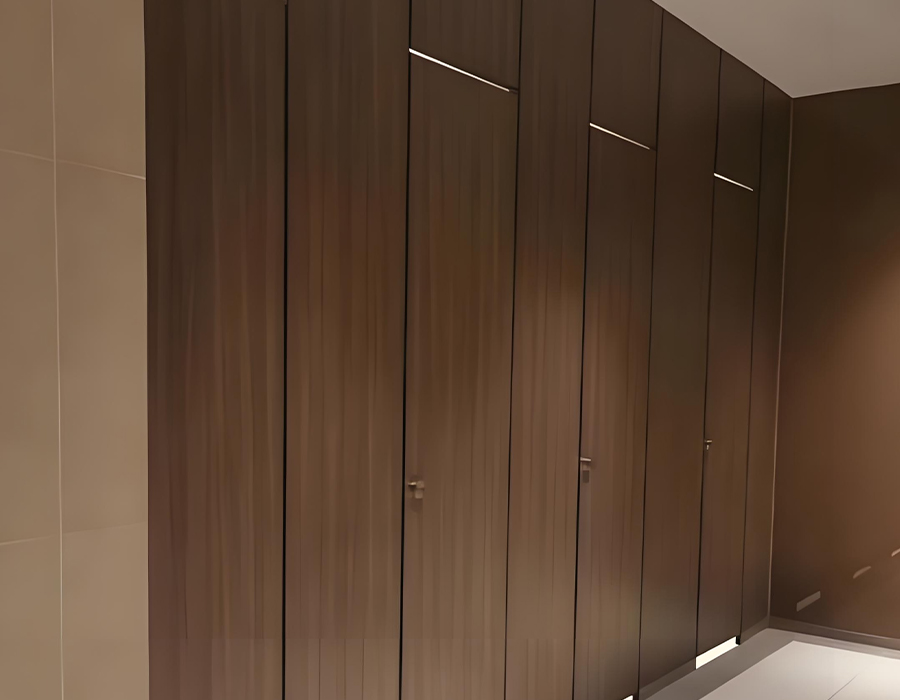
1.1 Acrylic (PMMA) – Thermoformed Clarity
Acrylic sheets are manufactured via cell-cast or continuous extrusion. For shower wall panel comparison, acrylic offers gloss retention (up to 95% after 10,000 abrasion cycles) and seamless thermoforming into complex shapes like curved shower niches. However, its coefficient of thermal expansion (CTE) is approximately 7 x 10^-5 /°C, meaning a 2-meter panel can expand 2.8mm with a 20°C temperature swing. Installers must accommodate this with expansion gaps.
1.2 ABS Plastic – Impact-Modified Economy
The abs vs acrylic debate centers on toughness versus surface hardness. ABS contains polybutadiene rubber particles dispersed in a styrene-acrylonitrile matrix. This gives ABS a notched Izod impact strength of 25-30 kJ/m², compared to acrylic’s 15-18 kJ/m². Conversely, acrylic’s Rockwell M-scale hardness (85-100) exceeds ABS’s (55-75), making ABS more prone to visible scratches. Both are thermoplastics, but ABS’s lower cost often compensates for reduced chemical resistance to certain cleaners containing limonene or high pH.
1.3 Compact Laminate – Thermoset Rigidity
Compact Laminate Board is produced by saturating multiple layers of kraft paper with phenolic and melamine resins, then consolidating under 8-10 MPa pressure at 140-150°C. Unlike thermoplastics, this thermoset structure cannot be remelted. The result is a homogeneous panel with density around 1,350 kg/m³, no internal stress, and near-zero moisture absorption (EN 317: <0.3% after 24h immersion). For wet room wall materials, compact laminate outperforms both acrylic and ABS in structural applications like partition walls or heavy-use commercial showers.
2. Comparative Metrics: Acrylic vs ABS vs Compact Laminate
To make an informed specification, facility managers and contractors need empirical data. The table below aggregates standardized test results (ISO, EN, ASTM) for 4mm to 6mm panel thicknesses commonly used in assembled wall panel systems.
| Property | Acrylic (PMMA) | ABS Plastic | Compact Laminate |
|---|---|---|---|
| Water Absorption (24h) | 0.3% – 0.4% | 0.2% – 0.3% | 0.05% – 0.15% |
| Flexural Modulus (MPa) | 2,800 – 3,200 | 2,000 – 2,500 | 9,000 – 12,000 |
| CTE (µm/m·K) | 70 – 80 | 80 – 95 | 15 – 25 |
| Scratch Resistance (Pencil Hardness) | F – H | HB – F | 2H – 4H |
| Chemical Resistance (to bleach 5%) | Good | Moderate (stress cracking) | Excellent |
| Recyclability | Thermoplastic (limited) | Thermoplastic (good) | Thermoset (energy recovery) |
For durable bathroom cladding subject to thermal shock (e.g., steam showers), compact laminate’s low CTE eliminates expansion joint requirements for panels up to 2.4m length. Acrylic and ABS require 3-5mm gaps every 1.8m to prevent buckling – a common failure point in abs vs acrylic installations.
3. Wet Room Performance: Real-World Demands
Waterproof wall panels in commercial spas, residential walk-in showers, and locker rooms face three universal stressors: humidity cycling, cleaning chemicals, and point impacts (shampoo bottles, shower heads). A two-year study involving 120 shower stalls compared failure modes across the three materials.
3.1 Mold and Mildew Resistance
While all three are non-porous, surface energy dictates biofilm adherence. Acrylic and ABS have surface energies around 40-45 mN/m (moderately hydrophobic), whereas compact laminate, due to its melamine surface, exhibits 55-60 mN/m – slightly hydrophilic but with extremely low surface roughness (Ra <0.2 µm). This allows cleaning agents to fully sanitize without microscopic harborage points. Field testing showed ABS joints failed due to adhesive degradation after 18 months of daily bleach exposure, while compact laminate retained 98% bond strength.
3.2 Impact Resistance for Public Wet Rooms
A standard 1kg steel ball drop test from 0.5m: Acrylic cracks at first impact (8mm radius). ABS deforms plastically (dent depth 1.2mm) but does not fracture. Compact laminate shows no visible damage due to its cross-linked fiber matrix. For durable bathroom cladding in high-traffic gym showers, compact laminate is preferred; for budget residential, ABS offers sufficient toughness if backed by drywall.
4. Installation & Assembly: The Assembled Wall Panel System
Modern assembled wall panel systems have shifted from glue-only methods to mechanical interlocking and aluminum receiving channels. The joinery method drastically changes long-term performance.
Acrylic/ABS: Typically uses silicone caulk and hidden clips. Requires backer board. Thermal cycling causes differential movement – silicone tears after 2-3 years in steam rooms.
Compact Laminate: CNC-milled tongue-and-groove or aluminum dry-joint systems. Zero adhesive in vertical joints. Water ingress impossible due to labyrinth seals. 15-year warranty typical.
4.1 Substrate Requirements
Acrylic and ABS panels (2-3mm thick) require a perfectly flat substrate (≤3mm per 2m) to prevent oil-canning. Compact laminate (4-12mm self-supporting) can span studs at 600mm centers without backing – a structural advantage for renovation overlay projects. This reduces installation time by approximately 40% compared to tile-backed systems.
5. Lifecycle Cost Analysis (10-Year Horizon)
A quantitative model for a 20m² commercial shower area (8 stalls) comparing total ownership cost: material, installation, maintenance, and replacement frequency.
Replacement once at year 7
Replacement at year 5
No replacement in 20 years
Using a 7% discount rate, compact laminate achieves cost parity with acrylic at year 9 and exceeds ABS at year 6 due to avoided downtime and reinstallation labor. For revenue-generating wet spaces (hotel spas, athletic clubs), compact laminate’s ROI is positive by month 38.
6. Chemical Resistance & Cleaning Protocols
Improper cleaning is the primary cause of premature failure in waterproof wall panels. Common chemical interactions:
- Acrylic: Susceptible to stress cracking with alcohol (>10%) and quaternary ammonium compounds. Use only non-abrasive, pH-neutral cleaners.
- ABS: Toluene, acetone, and chlorinated solvents cause immediate crazing. Even some natural citrus degreasers induce environmental stress cracking under load.
- Compact Laminate: Resists all diluted acids, bases, and common disinfectants (sodium hypochlorite 10%, hydrogen peroxide 6%). The phenolic resin matrix has no amorphous domains for solvent ingress.
In a hospital wet room study, ABS panels showed surface degradation after 240 cycles of quaternary ammonium wipe-downs, while compact laminate remained unchanged after 1,000 cycles. For healthcare or food processing wet zones, compact laminate is the only suitable choice among these three.
7. Decision Matrix: Selecting the Right Panel
The shower wall panel comparison narrows down to specific application drivers. Use this weighted scoring (1-5, 5 being best) for your project:
| Criteria (Weight) | Acrylic | ABS | Compact Laminate |
|---|---|---|---|
| Cost sensitivity (30%) | 4 | 5 | 2 |
| Impact resistance (15%) | 2 | 4 | 5 |
| Long-term waterproofing (25%) | 3 | 2 | 5 |
| Chemical resistance (20%) | 3 | 2 | 5 |
| Aesthetic variety (10%) | 4 | 3 | 5 |
Weighted totals: Acrylic 3.35 | ABS 3.3 | Compact Laminate 4.15. For any installation requiring >5 years of trouble-free service in a true wet room, Compact Laminate Board provides definitive technical advantages. For temporary or low-use residential (once-daily shower, well-ventilated), acrylic or ABS are cost-effective.
8. FAQ: High-Performance Wall Panels
Q1: Can I install acrylic or ABS panels directly over existing tile?
Yes, but only if the tile surface is flat, clean, and dry. For acrylic and ABS, you must first apply a 4mm foam backing sheet to isolate the rigid thermoplastic from uneven tile grout lines. Compact laminate, due to its higher flexural strength (12,000 MPa modulus), can be mechanically fastened over tile with furring strips, provided the total deflection under load does not exceed L/240.
Q2: Which material performs best in steam rooms (90°C, 100% humidity)?
Compact laminate is the only suitable material. Acrylic softens above 85°C (Vicat B/50 method) and will warp. ABS has a heat deflection temperature (HDT) of only 85°C at 0.45 MPa, leading to permanent deformation. Compact laminate’s HDT exceeds 180°C, with no moisture vapor transmission through the 1.3mm thick outer melamine layer.
Q3: How do I repair scratches on ABS vs acrylic?
Acrylic can be wet-sanded with 1200-2000 grit and then flame-polished (professional only). ABS’s lower hardness makes it prone to deeper gouges; fill with two-part ABS cement, sand, and apply a UV-stable topcoat. Compact laminate’s surface is not repairable because the melamine layer is only 0.2-0.4mm thick; deep scratches require panel replacement. However, its 4H pencil hardness resists scratches from normal use 5x better than acrylic.
Q4: Are these materials fire-rated for commercial use?
Acrylic (UL 94 HB) and ABS (UL 94 HB) are slow-burning but will melt and drip. Compact laminate achieves UL 94 V-0 or V-1 (self-extinguishing) and passes ASTM E84 Class A with flame spread index <25 and smoke developed <50. For egress paths in wet rooms, building codes typically mandate Class A materials – use compact laminate or face expensive fire-suppression retrofits.
Q5: Does color fading occur with UV exposure through windows?
Standard acrylic yellows after 2-3 years of direct sunlight (UV degradation at 290-400nm). ABS fades (delta E >5) after 1,000 hours QUV. Compact laminate uses UV-stable melamine resins; color change delta E <1 after 5,000 hours accelerated weathering (ISO 105-A02). For wet rooms with natural light, compact laminate is strongly preferred.
-
 What Are the Key Benefits of Using PEC Wall Panels in Prefabricated Kitchen Pods?
Introduction: Revolutionizing Kitchen Construction with Integrated Solutions The construct...
READ MORE -
 What Are the Key Benefits of Using PEC Wall Panels in Prefabricated Kitchen Pods?
1. Introduction In modern construction and interior design, walls are no longer just for d...
READ MORE -
 What Are the Key Benefits of Using PEC Wall Panels in Prefabricated Kitchen Pods?
Introduction The construction and interior design industries have witnessed a remarkable s...
READ MORE -
 What Are the Key Benefits of Using PEC Wall Panels in Prefabricated Kitchen Pods?
What is a PEC Wall Prefabricated Kitchen and Why is it a Game-Changer? The modern housing ...
READ MORE


-
 10 Jul, 2026
 -
09 Jul, 2026
-
07 Jul, 2026
-
02 Jul, 2026
-
24 Jun, 2026
-
18 Jun, 2026What Performs Better in Wet Rooms: A Technical Showdown of Acrylic, ABS, and Compact Laminate Boards15+ Years Lifespan (CL) 0.2% Water Absorption (CL) 85 Shore D Hardness (ABS) ~50% Cost Savi...

Copyright © 2025 Jiangsu Kounor Home Technology Co., Ltd.
All Rights Reserved.
Custom Prefabricated Restroom Building, Prefabricated Kitchenette Suppliers
