
 English
 русский
 عربى
عربىWhy Commercial Construction is Shifting to Prefabricated Bathroom Pods
The commercial construction sector is undergoing a significant paradigm shift driven by the need for faster project delivery, higher quality standards, and predictable budgeting. Traditional multi-trade bathroom construction has long been recognized as a primary bottleneck on commercial jobsites. Coordinating plumbers, electricians, tiler, drywallers, and painters in a highly confined space frequently leads to scheduling delays, trade interference, and compounding quality control issues. To mitigate these systemic inefficiencies, developer and contractors are increasingly turning to off-site manufacturing solutions.
At the forefront of this industrial transition is the adoption of a prefab integrated bathroom. By shifting the fabrication of complex, high-density wet areas from the chaotic jobsite to a controlled factory environment, commercial projects achieve unprecedented levels of efficiency. This article provides a comprehensive technical analysis of why modern commercial construction is moving toward the prefab integrated bathroom, evaluating its financial impact, engineering advantages, installation workflows, and long-term asset value.
Understanding the Engineering of Modern Bathroom Pods
A modern prefab bathroom unit is a fully consolidated, volumetric architectural component engineered to arrive at a construction site complete with all structural framing, wall finishes, sanitary fixtures, electrical wiring, and internal plumbing. Rather than assembling discrete pieces on-site, the building design treats the bathroom as an independent structural block that integrates into the primary building frame.
The manufacturing process relies heavily on Building Information Modeling (BIM). Through precise digital design, structural engineers ensure that every modular bathroom design accounts for exact tolerance clearances, structural load distribution, and structural connection alignment. These units are typically manufactured using two primary structural methodologies: light-gauge steel framing or composite glass-reinforced polymer (GRP) molding.
Light-Gauge Steel Frame Pods
Steel-framed units offer traditional aesthetic flexibility. They utilize heavy-duty, galvanized steel studs to construct a rigid chassis. The interior walls can be lined with moisture-resistant board, fully tiled, or finished with natural stone. This type of prefab bathroom unit is ideally suited for high-end hospitality, commercial office towers, and premium multi-family residential developments where premium finishes and distinct layouts are mandatory.
Glass-Reinforced Polymer Pods
GRP units are molded monolithic structures. Because the ceiling, floors, and walls are integrated into single composite panels, they are highly impervious to water penetration. These pods are lightweight, exceptionally durable, and engineered for high-use environments such as student housing, healthcare facilities, and budget accommodations. The absence of tile grout lines reduces long-term maintenance requirements significantly.
Regardless of the structural material utilized, every single prefab bathroom pod is built to meet or exceed local building codes. Plumbing assemblies undergo hydrostatic pressure testing, and electrical circuits are subjected to rigorous dielectric strength testing on the factory floor before the pod is sealed, wrapped in protective membrane, and prepped for freight logistics.
Quantifying the Financial and Time-Saving Benefits of Bathroom Pods
The decision to implement off-site fabrication is heavily anchored in commercial financial metrics. When assessing a prefab bathroom pod cost versus traditional on-site construction, developers must evaluate total cost predictability alongside direct labor cost reductions. Traditional bathroom construction requires sequential trade interventions, which means any delay by a single trade ripples across the entire project schedule.
The primary financial catalyst behind modular bathroom adoption is a shortened project schedule, frequently referred to as time-saving bathroom installation. Because pod manufacturing occurs concurrently with site excavation, foundational pouring, and primary structural erection, the overall construction critical path is heavily compressed.
While raw material expenses for a commercial prefab bathroom can match or occasionally exceed standard loose material costs, the total cost mitigation becomes evident when analyzing auxiliary variables. The table below details how a factory-controlled approach modifies the financial variables of a commercial construction development.
| Cost Component | Traditional On-Site Build | Prefabricated Pod System |
|---|---|---|
| Labor Expenses | High hourly field rates; subject to local multi-trade labor shortages. | Optimized factory labor workflows; minimized field hours. |
| Material Waste | Average of 10 percent to 15 percent due to cutting errors and field damage. | Under 2 percent due to automated, precision factory scaling. |
| Defect Rectification | Expensive post-handover punch lists requiring multiple trade callbacks. | Identified and resolved during pre-delivery factory testing protocols. |
| Site Logistics | Continuous vertical hoisting of separate tile, pipe, and board shipments. | Single, structured crane lift sequence per floor level. |
Logistical Integration and Installation Methodology
Successfully deploying prefabricated bathrooms requires a structured logistical strategy that coordinates closely with the structural erection of the commercial facility. The integration process alters the traditional building timeline, requiring early structural considerations during the initial design phases rather than treating the bathroom as an afterthought.
The physical implementation of the pods onto the jobsite generally follows one of two standardized construction engineering procedures:
- Top-Down Crane Integration: In this methodology, the building frame is erected floor by floor. Before the concrete floor deck above is cast or structural steel beams are placed, the finished bathroom pods are hoisted via tower crane and lowered directly into their designated structural footprints. This approach is highly favored in high-rise hotel development.
- Horizontal Sideways Ingress: For structures utilizing wide horizontal floor plates or post-tensioned concrete slab configurations where top-down placement is restricted, pods are brought in horizontally. The units are hoisted to a temporary cantilevered staging platform on the building exterior and rolled into position using specialized heavy-duty machinery skates or pallet jacks before perimeter wall cladding is finalized.
To optimize the installation flow, architectural engineers design structural slab depressions ranging from 20 millimeters to 50 millimeters within the primary concrete slab. This depression ensures that once the pod chassis is secured, the finished floor level of the pod sits flush with the adjacent hallway or bedroom flooring, eliminating hazardous thresholds and meeting accessibility standards.
Technical Note on Tolerances: Traditional construction operating tolerances typically range within 10 millimeters to 15 millimeters. In contrast, manufacturing a high-quality prefab bathroom pod requires working to tight tolerances of plus or minus 2 millimeters. This structural precision ensures that external drywall partitions interface seamlessly with the structural outer frame of the pod modules.
Architectural Finish Options and Structural Versatility
A common misconception within the commercial sector is that off-site modular manufacturing restricts design creativity, resulting in repetitive, clinical layouts. In reality, modern computational design tools allow commercial developers to customize architectural finishes within a prefab integrated bathroom to meet diverse project specifications.
From high-end luxury marble tiling and concealed LED accent lighting to heavy-duty, tamper-resistant institutional fixtures, the internal layout can be configured to match specific architectural concepts. The factory environment enhances the precision of high-end finishes; automated cutting machinery ensures flawless tile alignment, perfectly spaced grout joints, and uniform sealant applications that are difficult to replicate consistently under variable field conditions.
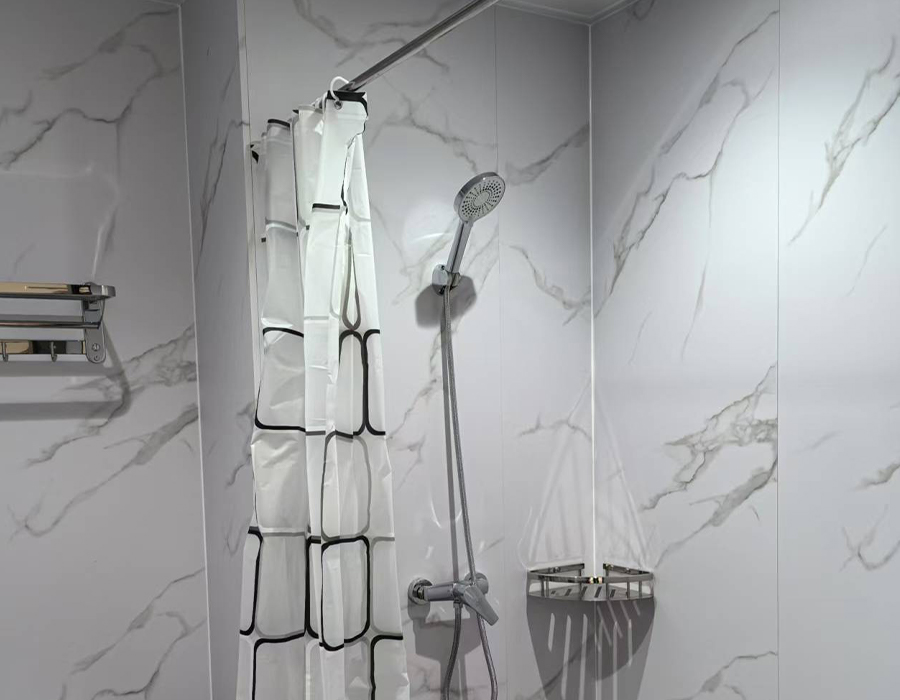
Furthermore, utilizing modular solutions assists projects aiming for environmental certifications. Because production takes place within a centralized facility, material handling is highly optimized. Excess components are immediately sorted and recycled, dust generation on the construction site is reduced, and the localized carbon footprint associated with multiple trades commuting to a jobsite daily is minimized.
Frequently Asked Questions regarding Prefabricated Bathroom Modules
Q1: At what point in the commercial design cycle must bathroom pods be selected?
Bathroom pods must be integrated during the early schematic design or design development phases. Because the architectural floor plan, structural column spacing, MEP slab penetrations, and structural slab depressions must accommodate the precise dimensions of the manufactured unit, retrofitting pods into a pre-existing traditional building design later in the process can introduce unnecessary engineering complexities.
Q2: How are MEP utilities connected from the pod to the primary building infrastructure?
Every prefabricated pod is designed with centralized mechanical, electrical, and plumbing (MEP) connection interfaces, usually situated within an external service shaft or accessible wall panel. Once the unit is physically anchored to the concrete floor slab, site plumbers and electricians connect the main hot and cold water distribution lines, waste drainage stacks, electrical conduits, and ventilation ductwork directly to these single-point interfaces.
Q3: How is water ingress prevented at the interface between the pod floor and the main structure?
Water containment is managed through double-barrier engineering. The pod itself features an integrated, continuous waterproof pan or base frame that prevents internal moisture from escaping. Externally, the perimeter expansion joint where the pod structure meets the structural concrete floor slab depression is treated with commercial-grade elastomeric waterproofing membranes and high-movement joint sealants to ensure a durable, watertight seal.
Q4: Does the use of prefabricated bathrooms affect the long-term asset maintenance of a building?
Yes, it typically improves maintenance outcomes. Because the internal components, valves, pipe networks, and electrical junctions are mapped via BIM and assembled under factory quality controls, long-term component failures occur less frequently. Most commercial pods are engineered with dedicated access hatches, allowing maintenance personnel to service main shut-off valves and drainage traps without disturbing the internal guest space.
Q5: What impact do prefabricated pods have on freight logistics and structural hoisting budgets?
While pods require dedicated transport flatbeds and planned tower crane usage, they optimize overall site logistics. Delivering up to eighty fully completed bathrooms in organized shipments eliminates hundreds of individual material deliveries for drywall, framing, tile, and fixtures. This reduction minimizes on-site material handling, lowers site congestion, and decreases the risk of material damage or loss on-site.
-
 What Are the Key Benefits of Using PEC Wall Panels in Prefabricated Kitchen Pods?
Introduction: Revolutionizing Kitchen Construction with Integrated Solutions The construct...
READ MORE -
 What Are the Key Benefits of Using PEC Wall Panels in Prefabricated Kitchen Pods?
1. Introduction In modern construction and interior design, walls are no longer just for d...
READ MORE -
 What Are the Key Benefits of Using PEC Wall Panels in Prefabricated Kitchen Pods?
Introduction The construction and interior design industries have witnessed a remarkable s...
READ MORE -
 What Are the Key Benefits of Using PEC Wall Panels in Prefabricated Kitchen Pods?
What is a PEC Wall Prefabricated Kitchen and Why is it a Game-Changer? The modern housing ...
READ MORE



-
 11 Jun, 2026
 -
04 Jun, 2026
-
28 May, 2026
-
21 May, 2026
-
14 May, 2026
-
14 May, 2026

Copyright © 2025 Jiangsu Kounor Home Technology Co., Ltd.
All Rights Reserved.
Custom Prefabricated Restroom Building, Prefabricated Kitchenette Suppliers
