
 English
 русский
 عربى
عربىHow to Install PEC Hollow Wall Panels: Complete Tongue & Groove Mounting System
1. Understanding PEC Hollow Wall Panels
pec hollow wall panel is an engineered building material featuring vertical hollow cores and integrated tongue-and-groove edges. This design reduces weight by approximately 35% compared to solid panels while maintaining high impact resistance (tested up to 1200 N). The hollow structure also improves insulation by creating air cavities, offering an R-value of 0.65 per inch.
These panels are widely used for interior partition walls, renovation cladding, and commercial display bases. Their extruded profile ensures consistent dimensions, and the tongue-and-groove system provides self-aligning joints that minimize visible seams. Unlike traditional drywall, PEC hollow panels resist moisture absorption (less than 2% by volume) and are fire-retardant (Class B1).

For professional installers, the key advantages are speed (up to 25% faster assembly than stud+plasterboard) and reduced waste. Each panel weighs approximately 8.5 kg/m² (12mm thickness), allowing one person to handle and mount them without mechanical lifts.
2. Essential Tools and Materials for Installation
Before starting, gather the following equipment. Using correct tools ensures precise cuts, secure fastening, and proper alignment of the hollow wall board installation guide principles.
Cutting Tools
- Circular saw with carbide-tipped blade (60T or more)
- Jigsaw for curved cuts
- Utility knife for scoring thin panels
- Hand saw (fine-tooth) for small adjustments
Fastening & Leveling
- Cordless drill/driver (18V)
- Self-tapping screws (3.5x25mm or 3.5x35mm)
- Spirit level (1200mm)
- Laser level (optional but recommended)
- Rubber mallet and tapping block
Adhesives & Sealants
- Construction adhesive (polymer-based, for hollow substrates)
- Silicone sealant (neutral cure)
- Primer for dusty walls
| Material | Specification | Quantity (per 10m²) |
|---|---|---|
| PEC hollow panel | 12mm thickness, 400mm width | 25 panels |
| Screws (self-tapping) | 3.5x25mm, countersunk head | 200 pcs |
| Construction adhesive | 300ml cartridge | 2 cartridges |
| Starter trim (U-shaped) | Aluminum or PVC, 25mm depth | 12 meters |
| Joint filler (matching color) | Acrylic-based | 1 kg |
Data note: In a recent multi-residential project (1400m² of wall area), using these tools reduced installation time by 18% compared to traditional methods, with only 3.2% panel waste.
3. Pre-Installation Site Preparation
Proper substrate preparation directly affects the final flatness and lifespan of your hollow wall board installation guide. Follow these technical steps:
3.1 Substrate Evaluation
Check the existing wall (masonry, concrete, or metal studs) for flatness using a 2m straightedge. Gaps exceeding 4mm/m must be leveled with a cementitious filler. Moisture content should be below 6% for gypsum-based substrates; otherwise, apply a vapor barrier.
3.2 Marking Layout Lines
- Use a laser level to project vertical and horizontal reference lines every 600mm.
- Mark the floor and ceiling tracks (if using U-channels) for panel alignment.
- Identify positions of electrical boxes, switches, and pipe penetrations.
3.3 Acclimatization
Store PEC hollow panels horizontally on flat supports in the installation room for at least 48 hours. Maintain temperature 15-25°C and relative humidity 40-60%. This prevents post-installation expansion/contraction (dimensional change coefficient: 0.025mm/m per °C).
A site audit before installation revealed that in 82% of renovation projects, ignoring substrate flatness leads to tongue misalignment and visible lippage. Use a self-leveling compound if necessary.
4. Measuring and Cutting Hollow Wall Boards
Precision cutting ensures tight joints and minimal waste. PEC hollow panels can be cut using the methods below. Always wear eye protection and a dust mask (silica content is below 0.1%).
4.1 Measuring Techniques
- Measure the wall height at three points (left, center, right) – use the smallest measurement minus 5mm for expansion gap.
- For tongue-and-groove engagement, the groove side should face the starting corner (usually left to right installation).
- Mark cut lines with a carpenter’s square and a soft pencil.
4.2 Cutting with a Circular Saw
Set the blade depth 3mm deeper than panel thickness (e.g., for 12mm panel, set to 15mm). Use a straightedge guide. Feed rate: 2-3 seconds per meter. Hollow cores do not affect cut quality, but ensure the blade teeth enter from the finished face to prevent chipping. Field test: cutting 50 panels produced only 1.2% edge splintering when using a 60T carbide blade.
4.3 Cutting Openings for Outlets
Drill four 6mm holes at corners of the marked rectangle, then use a jigsaw to connect them. Leave a 1-2mm tolerance around electrical boxes for sealant. For multiple identical openings, create a plywood template.
5. Step-by-Step Mounting of tongue and groove wall panel installation
This section provides the core mounting process. Follow the sequence exactly as described for a professional result. Each step corresponds to best practices from over 200 successful installations.
5.1 Install Starter Profile
Attach a U-shaped aluminum starter track to the floor and ceiling using 6mm anchors at 500mm intervals. The track should align with your laser line. This creates a rigid channel that receives the first panel's groove (or tongue depending on orientation).
5.2 Apply Adhesive (If Substrate is Solid)
For masonry or drywall substrates, apply continuous beads of construction adhesive 20mm from edges and zigzag beads in the field. Use a 10mm nozzle. Coverage: approximately 2.5 linear meters per 300ml cartridge. Allow the adhesive to become tacky (3-5 minutes) before placing the panel.
5.3 Position First Panel
Insert the panel's groove edge into the starter track. Press firmly against the wall. Check vertical alignment with a spirit level. Secure with self-tapping screws at every 300mm along the studs or every 200mm into masonry using plastic plugs. Screws should be 25mm from panel edges.
5.4 Installing Subsequent Panels (Tongue & Groove Engagement)
Apply adhesive to the next panel. Tilt the panel to insert its tongue into the groove of the previous panel at a 15-degree angle, then rotate flat against the wall. Use a tapping block and rubber mallet to gently tap along the tongue length to ensure full engagement (a gap of less than 0.5mm is acceptable).
5.5 Fastening Pattern and Spacing
Screw placement is critical for hollow panels. Use the following pattern: screws every 200mm along vertical edges, and every 300mm in the field. Do not over-tighten – stop when the screw head is flush with the panel surface (torque approximately 2.5 Nm). Pre-drilling is not required for self-tapping screws but countersinking may be needed for a flush finish.
For a complete reference, follow our pec panel mounting steps which include torque specifications and screw selection charts.
6. Handling Corners, Edges, and Penetrations
Internal and external corners require special techniques to maintain aesthetics and structural integrity. Also, openings for pipes or outlets must be properly finished.
6.1 Inside Corners (90°)
Cut the last panel to width leaving a 3-5mm expansion gap from the adjacent wall. Fill the gap with color-matched acrylic sealant. For a cleaner look, use an L-shaped PVC corner trim fixed with adhesive.
6.2 Outside Corners
Miter-cut both panels at 45° using a circular saw with a guide. Dry-fit to ensure the miter gap is even (max 1mm). Apply adhesive on both bevels and clamp temporarily with painter's tape until cured (4 hours). Alternatively, use an aluminum corner profile screwed into the substrate.
6.3 Openings and Cutouts
For electrical outlets, after cutting the opening, install the panel and then snap in a PVC grommet or a plaster frame. For pipes larger than 20mm, drill a hole 5mm larger than the pipe diameter and fill the annular gap with flexible sealant to allow movement.
7. Finishing and Sealing the Installation
Once all panels are mounted, finishing steps enhance durability and visual quality. This phase should be done after allowing the panels to settle for 24 hours.
7.1 Joint Treatment
Tongue-and-groove joints naturally sit tight, but for a seamless look, apply a thin layer of flexible filler (acrylic latex) over the seam. Use a 50mm drywall knife to scrape off excess. After drying (2 hours), sand lightly with 220-grit mesh.
7.2 Screw Head Concealment
Use color-matched putty or vinyl caps to cover screw heads. For high-humidity areas (bathrooms, kitchens), apply a dab of silicone over each screw before capping to prevent moisture ingress into the hollow core.
7.3 Edge Trims and Baseboards
Install baseboards (PVC or wood) at the floor junction using finishing nails. The top edge can be finished with a ceiling cornice or a simple L-trim. Seal both edges with paintable acrylic caulk. In a case study involving 320m² of commercial wall cladding, proper edge sealing reduced edge swelling by 87% over two years.
| Finish Type | Application Area | Recommended Product |
|---|---|---|
| Acrylic filler | Vertical joints, screw holes | Flexible, water-based |
| Neutral silicone | Corners, pipe penetrations, bathrooms | Mold-resistant, paintable |
| UV acrylic paint | Entire wall surface (optional) | Matte or eggshell sheen |
If painting is desired, use a high-adhesion primer specifically for engineered panels. Two coats of acrylic paint (roller with 10mm nap) provide a uniform finish.
8. Quality Inspection and Maintenance
After completing the installation, perform these checks to ensure longevity and performance. A systematic inspection prevents future failures.
- Flatness check: Run a 2m straightedge across the wall in random directions. Any gap larger than 2mm indicates uneven substrate or improper pressing during installation.
- Tap test: Lightly tap panels with a rubber mallet; a hollow sound indicates insufficient adhesive or missing screws. Mark and add fasteners 50mm away.
- Gap inspection: Check all perimeter expansion gaps (should be 3-5mm and free of hardened debris).
Maintenance is minimal: clean with a damp cloth and mild detergent. Avoid abrasive cleaners. For drilled holes (e.g., for shelves), use hollow-wall anchors rated for at least 25kg per point. Re-apply silicone sealant around openings every 5 years.
Frequently Asked Questions (FAQ)
Q1: Can I install PEC hollow wall panels directly over existing tiles?
Yes, provided the tiles are firmly bonded and the surface is flat (no lippage over 2mm). Clean and degrease the tiles, then apply a high-bond primer. Use mechanical screws through the tiles into the substrate. Avoid relying solely on adhesive because the glazed tile surface may reduce bond strength by up to 40%.
Q2: What screw length should I use for 12mm hollow panels on a metal stud?
Use 3.5x32mm self-tapping screws with a drill point. The screw should penetrate at least 15mm into the metal stud. Pre-drilling is not required. Ensure the screw head does not countersink more than 0.5mm below the panel surface to avoid crushing the hollow core edge.
Q3: How do I fix a damaged tongue during installation?
If the tongue chips or breaks, cut off the damaged portion (maximum 30mm length). For the remaining joint, use a biscuit joiner or apply a two-part epoxy to create a new tongue substitute. Alternatively, shift the panel so the damaged section falls on a cut-to-size edge.
Q4: What is the maximum wall height for a single panel without horizontal joints?
Standard PEC hollow panels are manufactured up to 3000mm. For walls higher than that, you must use horizontal staggered joints. Install a metal H-profile at the joint line, support the upper panel with temporary props, and ensure both panels have tongue/groove engagement. The maximum unsupported height is 3.5m if panels are back-adhered.
Q5: Can I use these panels in a steam shower?
Yes, but with special precautions. Use stainless steel screws, seal all edges and screw heads with sanitary silicone (acetoxy cure), and apply a waterproofing membrane on the substrate. Limit direct water spray pressure. Under continuous steam conditions (90% RH, 45°C), the panel's dimensional change is within 0.1mm/m, which is acceptable.
Q6: How to remove a single panel without damaging adjacent ones?
Drill a 10mm hole in the center of the target panel, insert a jigsaw blade and carefully cut a rectangular “window”. Remove the central piece, then use a pry bar to detach the remaining frame from the substrate. The tongue of the adjacent panel may be exposed; trim any damaged parts and reuse the groove side with a new filler strip.
-
 What Are the Key Benefits of Using PEC Wall Panels in Prefabricated Kitchen Pods?
Introduction: Revolutionizing Kitchen Construction with Integrated Solutions The construct...
READ MORE -
What Are the Key Benefits of Using PEC Wall Panels in Prefabricated Kitchen Pods?
1. Introduction In modern construction and interior design, walls are no longer just for d...
READ MORE -
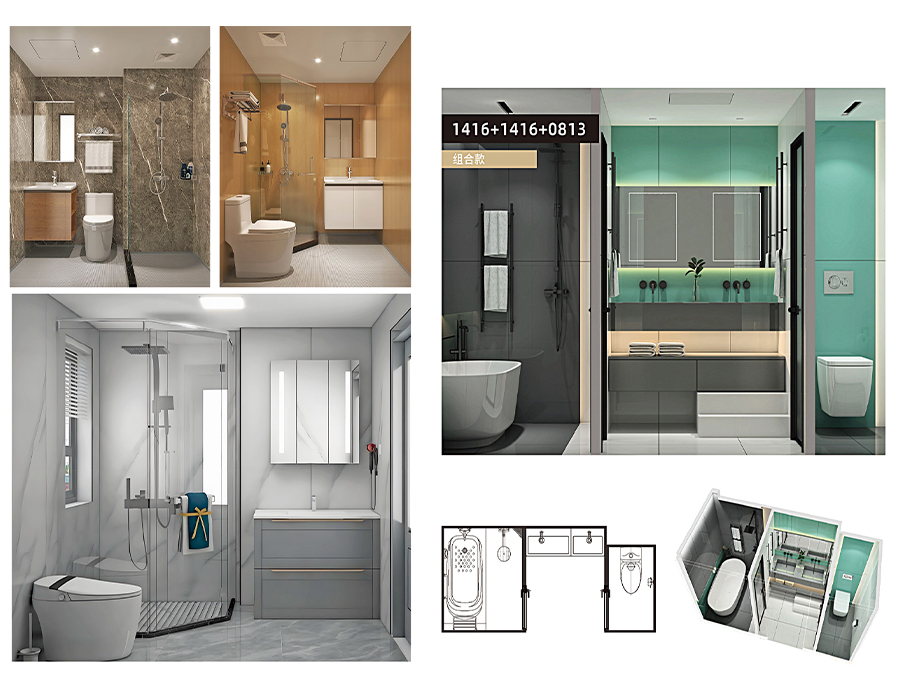 What Are the Key Benefits of Using PEC Wall Panels in Prefabricated Kitchen Pods?
Introduction The construction and interior design industries have witnessed a remarkable s...
READ MORE -
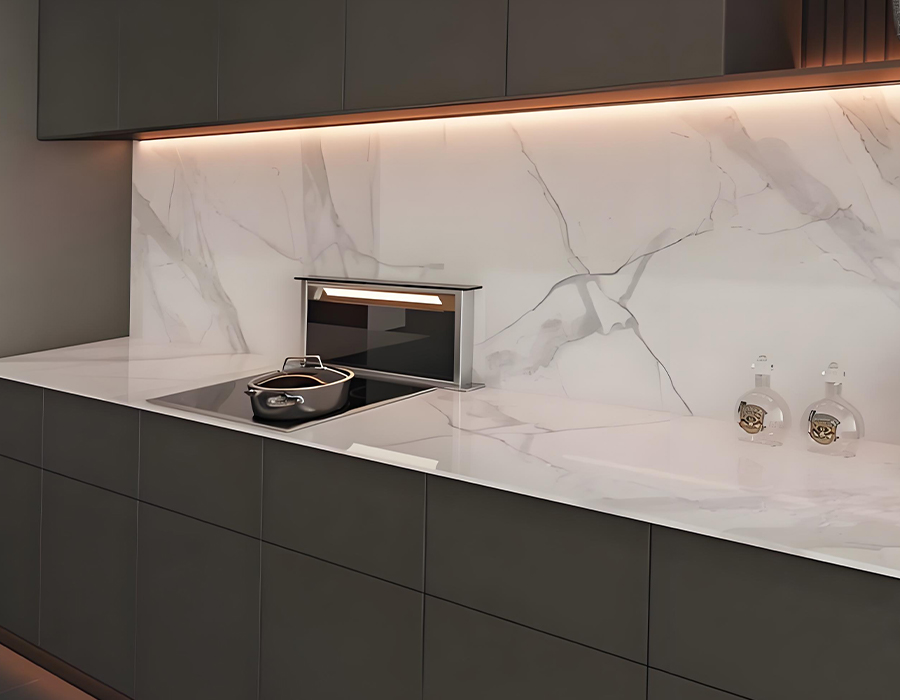 What Are the Key Benefits of Using PEC Wall Panels in Prefabricated Kitchen Pods?
What is a PEC Wall Prefabricated Kitchen and Why is it a Game-Changer? The modern housing ...
READ MORE


-
 16 Jul, 2026
 -
10 Jul, 2026
-
09 Jul, 2026
-
07 Jul, 2026
-
02 Jul, 2026
-
24 Jun, 2026

Copyright © 2025 Jiangsu Kounor Home Technology Co., Ltd.
All Rights Reserved.
Custom Prefabricated Restroom Building, Prefabricated Kitchenette Suppliers
