
 English
 русский
 عربى
عربىWhat makes a tile prefab bathroom look different from a traditional bathroom?
Introduction to Off-Site Construction and Aesthetic Paradigms
The construction industry is undergoing a significant transition from traditional, labor-intensive on-site wet trades to sophisticated off-site manufacturing processes. This shift, often categorized under Design for Manufacture and Assembly (DfMA), fundamentally alters not only the structural integrity and installation timelines of building components but also their final visual characteristics. In the context of sanitary spaces, the implementation of a Tile Prefabricated Full Bathroom Room represents a major departure from conventional bathroom construction. This article provides a highly technical, rigorous analysis of the specific factors that differentiate the final aesthetic appearance of a factory-built, tiled modular unit from a bathroom constructed entirely on-site using traditional methodologies.
While both approaches aim to deliver a functional, waterproof, and visually appealing space, the underlying processes dictate the visual outcome. Traditional construction relies heavily on the individual skill of on-site tradespeople, the sequencing of multiple sub-contractors, and the variable conditions of the construction site. Conversely, volumetric modular construction utilizes a controlled factory environment, standardized machinery, and stringent quality assurance protocols. These divergent environments manifest in observable differences regarding dimensional tolerances, surface planarity, joint consistency, and the seamless integration of mechanical and electrical services.
Dimensional Tolerance and Spatial Geometry
Factory Controlled Precision
The most immediate visual distinction between prefabricated and traditional bathrooms lies in the precise execution of spatial geometry. In a factory setting, the structural chassis of the bathroom is typically fabricated using light-gauge steel frames, heavy-duty aluminum profiles, or unified composite materials. These materials are cut and assembled using computer numerical control (CNC) machinery. This automated process ensures dimensional accuracy to within a fraction of a millimeter. Consequently, the walls of a prefabricated unit are perfectly plumb, the corners constitute exact right angles, and the floor substrates maintain a uniform level before the introduction of drainage gradients.
Because the foundational geometry is flawless, the subsequent application of wall boards and ceramic finishes follows a mathematically precise grid. There are no tapering tile cuts required to hide uneven wall junctions, a common visual compromise found in on-site construction. The continuous, unbroken lines of the tile grid in a factory-built unit immediately convey a sense of highly engineered quality.
On-Site Substrate Variability
Traditional on-site construction must contend with the compounding errors of the building's primary structure. Concrete floor slabs may have high or low spots, and framing timbers or structural masonry walls may not be perfectly vertical. When an on-site tile setter encounters a wall that is out of plumb, they must adjust the thickness of the adhesive bed to compensate, or progressively cut the tiles to fit the skewed corner. This results in visibly uneven grout lines at the perimeters of the room, ceiling lines that do not run parallel to the tile courses, and baseboards that fluctuate in height.
The visual impact of these on-site adjustments is particularly noticeable when utilizing large-format tiles or highly contrasting grout colors. A trained eye can easily differentiate the customized, sometimes irregular perimeter cuts of a traditional bathroom from the standardized, symmetrical tile layouts achieved in a modular production environment.
Tile Adhesion and Surface Planarity
Elimination of Lippage
Surface planarity refers to the flatness of the finished tiled wall or floor. "Lippage" is the industry term for variations in height between adjacent tiles. In prefabricated units, tiles are applied while the wall panels are frequently in a horizontal orientation on an assembly table. This completely negates the effect of gravity, which can cause heavy wall tiles to sag or slip slightly during the curing of the adhesive bed in vertical on-site installations. Furthermore, factory production often employs standardized mechanical leveling systems and automated pressure application rollers that press the tiles uniformly into the adhesive.
The result is a monolithic surface with virtually zero measurable lippage. When directional lighting or wall-washing light fixtures illuminate the tiled surface, a prefabricated wall will display smooth, uninterrupted reflections, whereas a traditional wall may reveal the micro-shadows cast by adjacent tile edges that are not perfectly flush.
Adhesive and Curing Consistency
The aesthetic longevity of the tiled surface is deeply tied to the underlying adhesion strategy. Factories utilize specialized industrial adhesives, often two-part epoxies or modified polyurethanes, applied in a temperature and humidity-controlled environment. These adhesives cure at a predictable rate, ensuring maximum bond strength across the entire surface area of every tile. On a traditional construction site, temperature fluctuations, dust, and inconsistent mixing of cementitious thin-set can lead to localized debonding over time. While not immediately apparent upon handover, this can eventually result in cracked grout joints or detached tiles, significantly degrading the aesthetic quality of the traditional space.
Grout Line Consistency and Material Integrity
Automated Spacing and Application
The visual rhythm of a tiled surface is dictated by its grout lines. In prefabricated manufacturing, tile spacing is often managed by rigid templating systems or robotic placement arms. This guarantees that every grout joint across the entire pod is exactly the same width, typically ranging from 1.5 to 2 millimeters depending on the specification. Traditional on-site tiling relies on the manual insertion of plastic cross-spacers. While generally effective, manual pacing can introduce slight variations, particularly when the tile setter is attempting to accommodate for the out-of-plumb walls discussed previously.
Furthermore, factory grouting utilizes pneumatic injection systems that ensure the grout material fully penetrates the depth of the joint without entraining air bubbles. The wiping and finishing process is timed perfectly with the curing rate of the factory environment. This consistency results in grout lines that are visually uniform in color, texture, and depth.
Prevention of Efflorescence
A critical aesthetic issue in traditional wet environments is the development of efflorescence—a white, powdery deposit of soluble salts that accumulates on the surface of grout and unglazed tiles. This occurs when moisture migrates through a porous substrate (like an on-site concrete screed), dissolves salts, and carries them to the surface as it evaporates. Modular units largely eliminate this issue by utilizing non-porous, highly engineered composite chassis floors and waterproof wall panels that do not contain the free salts found in traditional masonry and cement mixtures. Therefore, the grout in a prefabricated unit maintains its original color and clean appearance significantly longer than its on-site counterpart.
Floor Gradients and Drainage Aesthetics
Molded Bases versus Manual Screeds
Creating effective drainage in a wet room is a highly technical task that directly impacts the final look of the floor. In traditional construction, a worker must manually mix and pack a sand-cement screed, shaping the slope towards the floor drain using a straightedge and trowel. This process inevitably results in a multifaceted, sometimes irregular slope. To tile over this complex surface, especially with rigid ceramic materials, the installer must often create diagonal "envelope cuts" in the tiles so they can fold inward toward the drain. These necessary cuts break the visual continuity of the floor pattern.
Prefabricated systems address this by utilizing standardized, molded floor pans or CNC-milled waterproof subfloors. The gradient is engineered perfectly into the base material during the manufacturing phase. This allows for the use of linear drains and single-plane slopes. Consequently, large-format floor tiles can be laid continuously right up to the edge of the linear drain without the need for intersecting envelope cuts. This yields a minimalist, highly contemporary aesthetic characterized by unbroken floor planes and concealed water management systems.
Integration of Architectural Details and Fixtures
Concealed Systems and Niche Construction
The aesthetic superiority of a well-designed modular unit is highly evident in how it handles necessary fixtures and storage. Recessed shower niches, concealed cisterns for toilets, and integrated lighting channels require complex coordination between framing, plumbing, electrical, and tiling trades on a traditional site. Miscommunication or slight dimensional errors between trades often result in thick, bulky trim pieces used to cover gaps, or silicone caulking applied heavily to mask inconsistencies.
In an off-site manufacturing model, the entire assembly is detailed in 3D modeling software prior to construction. Niches are built into the wall framework with millimeter precision, allowing the tiles to wrap seamlessly into the recess without the need for external edge-banding profiles. Access panels for concealed plumbing are engineered to sit completely flush with the surrounding tile surface, minimizing visual disruption. The overall effect is a highly cohesive, custom-built appearance where architectural details appear inherent to the design rather than retrofitted as an afterthought.
Material Junctions and Sealant Profiles
Controlled Environment Sealing
The application of elastomeric sealants (silicone) at changes of plane—such as wall-to-floor joints, internal corners, and around sanitary ware—is crucial for waterproofing and final presentation. On a construction site, this is often one of the final tasks, performed in potentially dusty conditions with varying levels of lighting. Site-applied silicone joints can be uneven in width, prone to tooling marks, and susceptible to trapping dust particles during the curing phase, immediately degrading the "new" aesthetic.
Within the factory, sealant application is treated as a critical precision task. It is performed in clean, brightly lit bays, often using standardized profiling tools to ensure an exact radius on every corner. Because the ambient environment is strictly controlled, the sealants cure smoothly without capturing airborne debris. The resulting joints are visually minimal, crisp, and contribute to the overarching sense of clinical cleanliness associated with premium modular construction.
Aesthetic Resilience During Transportation and Installation
Structural Rigidity and Deflection Mitigation
It is a common misconception that factory-built units might suffer aesthetic damage during transportation to the site. In reality, modular pods are over-engineered structurally to withstand the dynamic forces of lifting and road transport. The chassis design incorporates immense torsional rigidity. This stiffness means that the tiled walls do not flex or deflect during the journey. In contrast, traditional stud-wall construction can experience settling and micro-deflection as the primary building structure shifts under loads, which is the primary cause of hairline cracks in grout joints and the corners of site-built bathrooms.
Because the modular unit acts as an independent, structurally self-sufficient cube, it isolates the interior aesthetic finishes from the movement of the host building. Once installed and commissioned, the visual integrity of the tiles, grout, and fixtures remains exactly as it left the quality control bay on the factory floor.
Protection from Site Damage
A critical factor in the final appearance of any room is the damage incurred during the chaotic final stages of site construction. Traditional bathrooms are subject to traffic from painters, electricians, and cleaners long after the delicate sanitary ware and tiles have been installed. Scratched chrome, chipped tiles, and stained grout are common handover defects that require unsightly patching or replacement.
Prefabricated units arrive on-site with doors locked and interiors protected. They act as sealed time capsules until the very end of the main construction project. This fundamental logistical difference ensures that the end-user receives a product with a pristine, unblemished aesthetic finish, entirely devoid of the collateral damage associated with traditional building sites.
Comparative Technical Data: Prefabricated vs Traditional Aesthetic Markers
The following data outlines the key metric differences that translate directly to the visual output of the two construction methodologies. These metrics highlight why the controlled environment yields a distinct look.
| Aesthetic/Technical Parameter | Prefabricated Modular Unit | Traditional On-Site Construction |
| Wall Plumbness Tolerance | ± 1.0 mm over 2.4m vertical | ± 3.0 to 5.0 mm over 2.4m vertical |
| Grout Line Width Deviation | < 0.5 mm | 1.0 to 2.5 mm |
| Surface Planarity (Lippage) | Effectively Zero (Mechanical leveling) | Visible under directional lighting |
| Floor Gradient Strategy | Engineered single-plane base | Hand-troweled multi-plane screed |
| Tile Cutting Requirement at Drain | Minimal/None (Linear drain integration) | High (Envelope cuts required for point drains) |
| Efflorescence Risk | Extremely Low (Non-porous chassis) | Moderate to High (Cementitious substrates) |
| Silicone Joint Profile | Automated/Tooled uniform radius | Manual application, prone to variance |
Acoustic and Haptic Perception of Aesthetics
The Sound and Feel of Solidity
Aesthetics in architecture extend beyond purely visual input; they encompass the haptic (touch) and acoustic (sound) perception of the space. The structural methodology of a room significantly alters how an occupant perceives its quality. Traditional stud walls, particularly in high-rise or commercial construction, often utilize thin cement boards or moisture-resistant drywall. When a user taps on a traditionally tiled hollow wall, it yields a vacant, reverberant sound, which can subconsciously detract from the perceived luxury of the finish.
Modular units address this through engineered substrates. Many factory-built systems employ dense composite panels, such as honeycomb aluminum cores sandwiched between fiberglass, or specialized structural foam boards. These substrates provide high rigidity and excellent acoustic dampening. When combined with industrial adhesives that provide 100% coverage behind the tile (unlike the sometimes spotty coverage of on-site troweling), the resulting wall feels and sounds dense, solid, and monolithic. This haptic feedback reinforces the visual precision, creating an overarching perception of premium engineering.
Summary of Key Design Features
To aggregate the technical data discussed, the defining visual and structural characteristics of the off-site modular approach can be categorized as follows:
- Geometric Uniformity: Exact ninety-degree corners allowing for unbroken, parallel tile courses without compensatory cuts.
- Surface Perfection: Zero tolerance for lippage due to horizontal application methods and automated leveling pressure.
- Material Purity: Complete elimination of efflorescence staining due to the absence of un-cured site concrete and masonry.
- Integrated Detailing: Flush, seamless architectural features (niches, panels) resulting from 3D coordination prior to assembly.
- Unaltered Delivery: A final aesthetic that is completely insulated from the damage and dust of the primary construction site.
Frequently Asked Questions
Q1: Does a modular structural frame restrict the aesthetic choices regarding tile size or pattern?
No. The highly rigid engineered substrates used in modern off-site manufacturing are explicitly designed to handle heavy loads without deflection. In fact, large-format ceramic slabs are often easier and safer to install in a factory setting than maneuvering them through restricted access ways on a traditional building site. The design limits are dictated by shipping dimensions, not interior aesthetic choices.
Q2: Are there visible structural seams where the prefabricated unit integrates with the surrounding building?
The interior aesthetic is completely self-contained. Any connections to the host building (such as external dry-lining or architraves around the entrance door) occur on the outside of the pod casing. Inside the bathroom, the user experiences a continuous, finished room identical in concept to a site-built room, but executed with higher precision.
Q3: How does the visual appearance of the ceiling differ in a modular unit?
Traditional ceilings are often skimmed plasterboard painted on site, subject to cracking and moisture damage. Modular units frequently utilize integrated composite ceiling panels or precisely fitted drop ceilings that house pre-wired LED lighting modules and extraction ventilation. These factory-finished ceilings present a cleaner, more moisture-resistant surface with perfectly aligned fixtures.
Q4: Can long-term settlement of the main building cause the factory-applied tiles to crack and look damaged?
The independent structural chassis of the module isolates the interior finishes from the host building's movement. While the main building structure may settle, the rigid pod acts as a single, decoupled volume. Therefore, the internal tile layout and grout lines are highly protected against the stress fractures that commonly plague traditional on-site masonry construction.
Q5: Is it visually obvious that the floor slope is different from a traditional build?
Yes, typically in a positive way. Traditional methods require multidirectional slopes to a central point drain, necessitating complex, visible cuts in the floor tiles. The molded bases of factory units usually feature a single, continuous slope leading to a sleek linear drain at the perimeter. This allows the floor tiles to remain uncut and continuous, resulting in a cleaner, modern aesthetic.
-
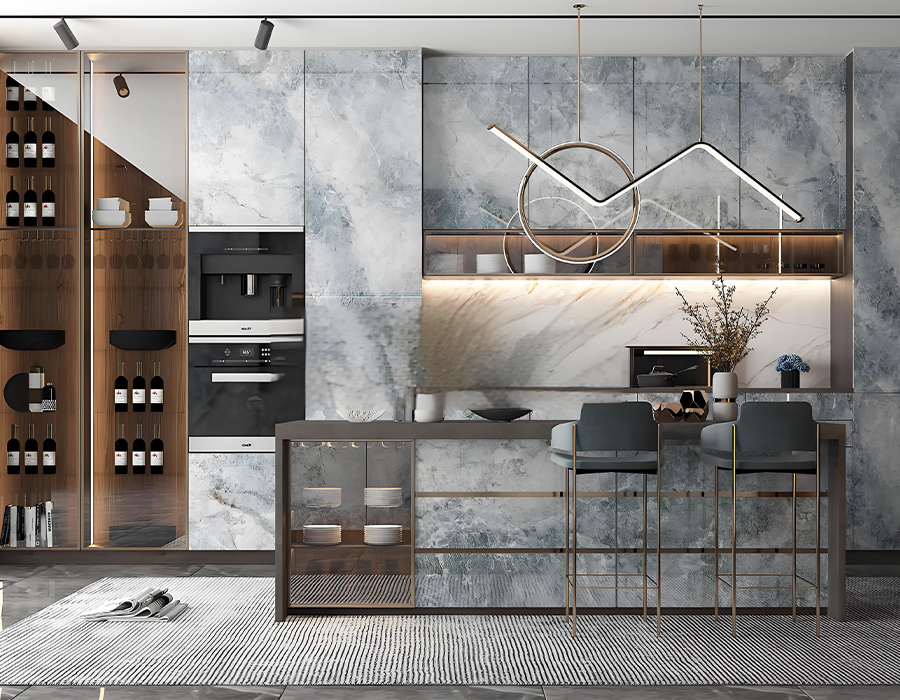 What Are the Key Benefits of Using PEC Wall Panels in Prefabricated Kitchen Pods?
Introduction: Revolutionizing Kitchen Construction with Integrated Solutions The construct...
READ MORE -
 What Are the Key Benefits of Using PEC Wall Panels in Prefabricated Kitchen Pods?
1. Introduction In modern construction and interior design, walls are no longer just for d...
READ MORE -
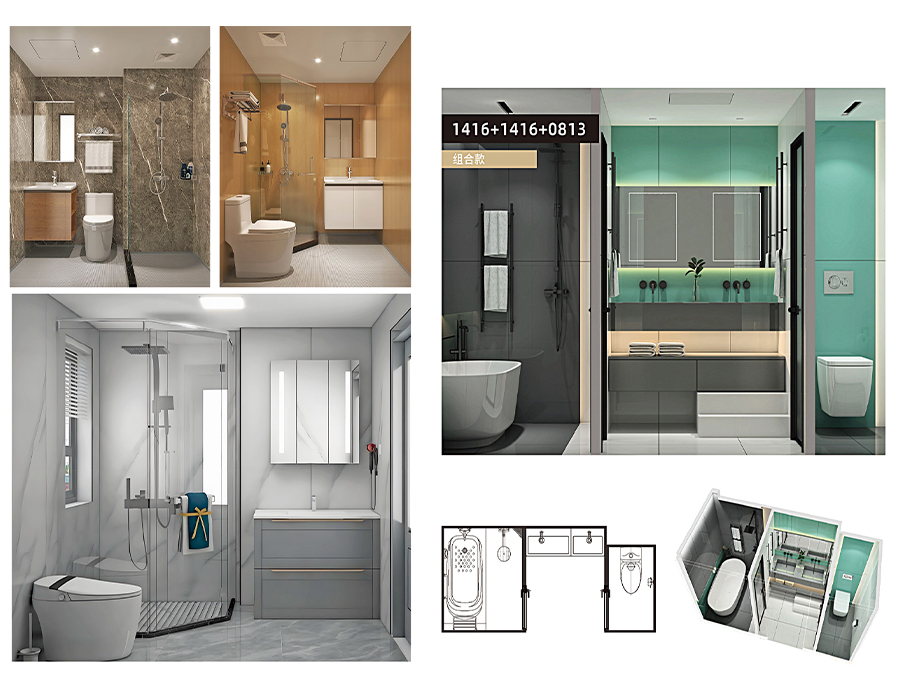 What Are the Key Benefits of Using PEC Wall Panels in Prefabricated Kitchen Pods?
Introduction The construction and interior design industries have witnessed a remarkable s...
READ MORE -
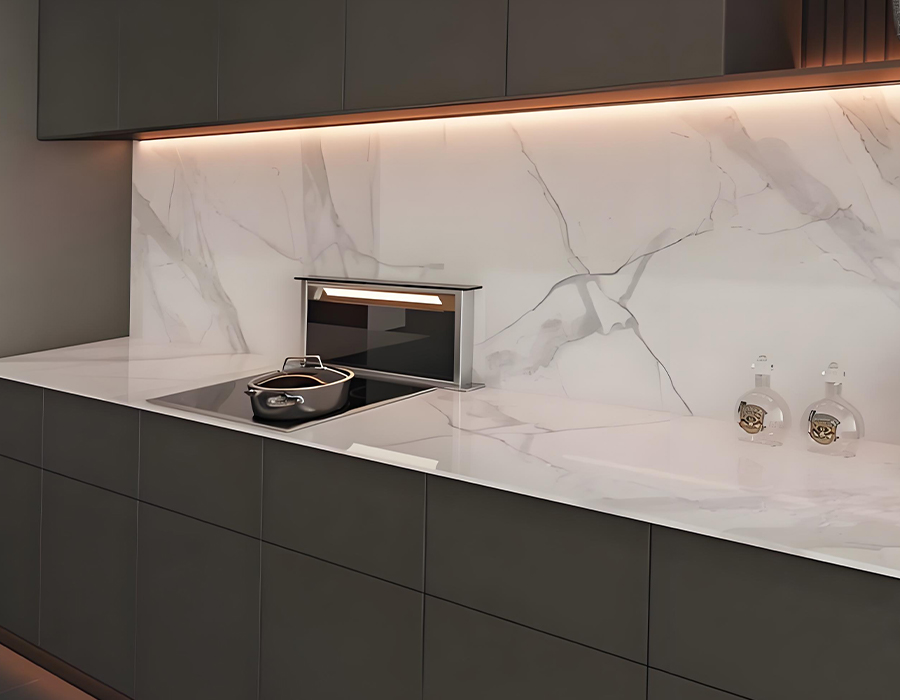 What Are the Key Benefits of Using PEC Wall Panels in Prefabricated Kitchen Pods?
What is a PEC Wall Prefabricated Kitchen and Why is it a Game-Changer? The modern housing ...
READ MORE



-
 16 Jul, 2026
 -
10 Jul, 2026
-
09 Jul, 2026
-
07 Jul, 2026
-
02 Jul, 2026
-
24 Jun, 2026

Copyright © 2025 Jiangsu Kounor Home Technology Co., Ltd.
All Rights Reserved.
Custom Prefabricated Restroom Building, Prefabricated Kitchenette Suppliers
